Opening salvage
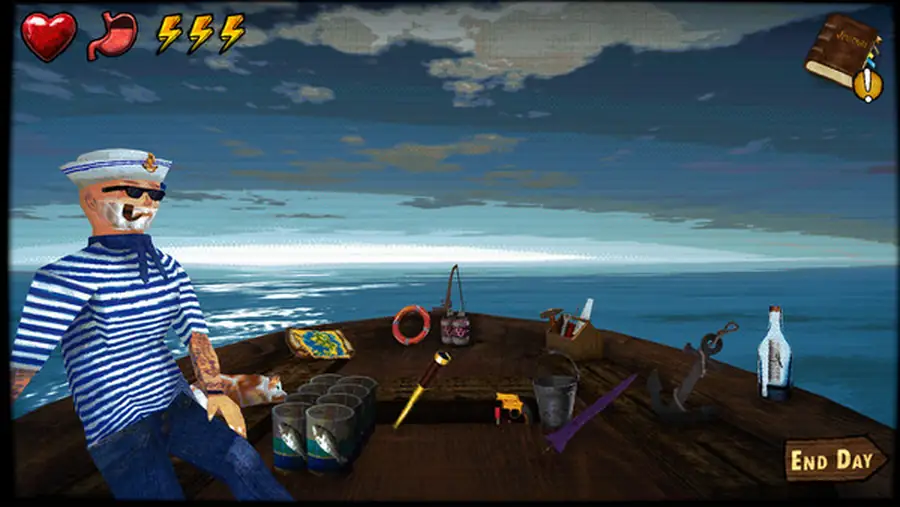
Prefer food, utility, fishing support, and repair tools over curiosities with no clear use.
 Fishes Guide
Endings guide
The safest way to hunt endings in Don't Sleep With The Fishes is to stop treating the game like a single hidden password. Treat every run as evidence across five checks: opening salvage, shipmate choice, day economy, night-event answers, and the final condition you are trying to preserve. This page starts spoiler-light, then gives a structured matrix for players ready to test routes without inventing fake ending names.
Search intent answer
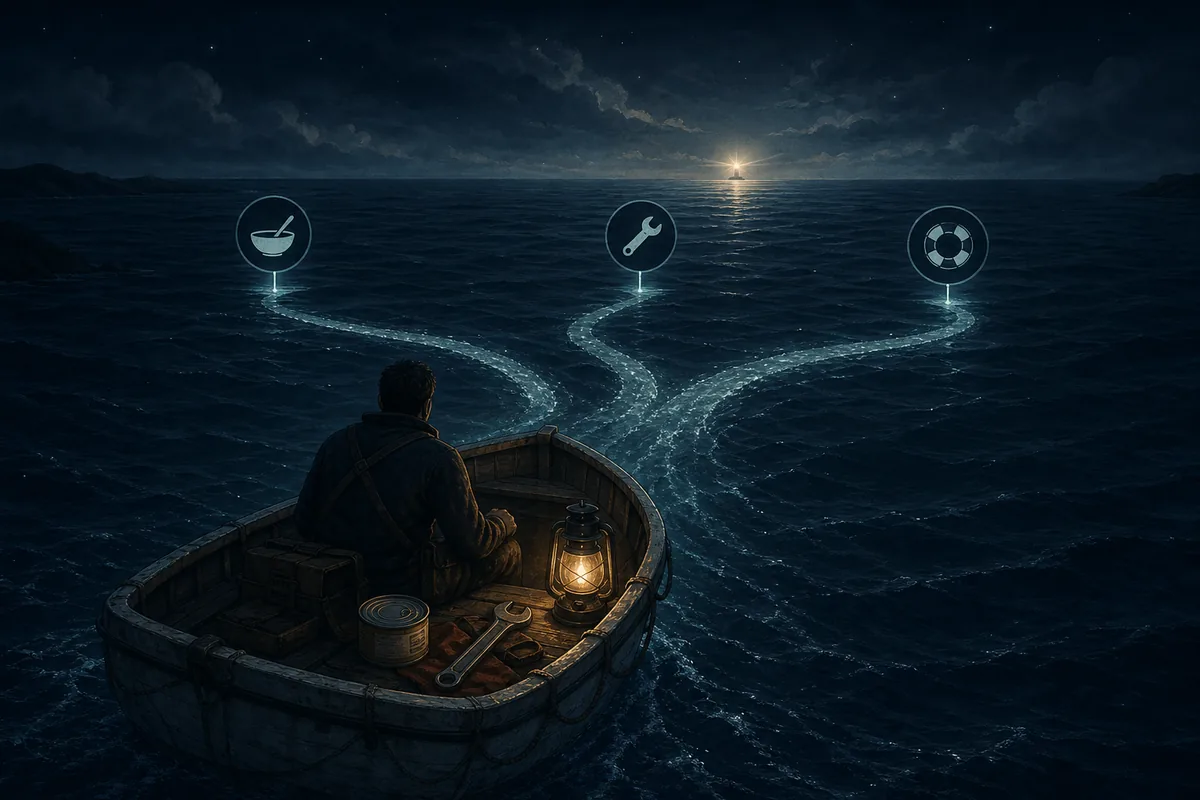
Public store information confirms multiple endings, randomized events, three possible shipmates, and a lifeboat with room for only one extra person. That makes ending progress a route-family problem, not a one-line recipe.
For a first serious run, choose one shipmate, bring flexible supplies, protect food and repairs, and never sleep with no plausible answer to a night interruption. For spoiler hunting, change one variable at a time and write down what you actually observed.
Use two columns in your notes: facts on the left, hypotheses on the right. A YouTube clip, a comment, or one lucky run can suggest a route, but it is not proof until you reproduce it with controlled changes.
If you are also hunting Steam achievements, keep achievement runs separate. Achievements can reward strange failures, while endings usually depend on a coherent route through survival pressure, companion dialogue, and item use.
Route logic
Prefer food, utility, fishing support, and repair tools over curiosities with no clear use.
Pick one companion path per run so dialogue changes and route consequences stay readable.
Each daytime action should protect the next night: food, fish, repairs, or concrete route information.
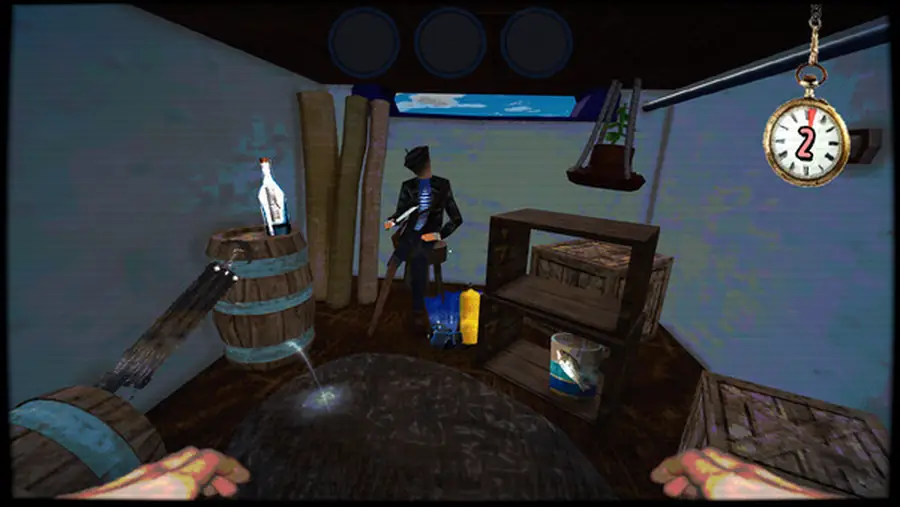
Before sleeping, confirm your inventory can answer at least one likely bad event.
Change only one major variable per attempt: companion, key item, hunger, repair state, or dialogue choice.
Opening evidence
Prefer food, utility, fishing support, and repair tools over curiosities with no clear use.
Public store information confirms multiple endings, randomized events, three possible shipmates, and a lifeboat with room for only one extra person. That makes ending progress a route-family problem, not a one-line recipe.
Spoiler-ready matrix
The safest way to hunt endings in Don't Sleep With The Fishes is to stop treating the game like a single hidden password. Treat every run as evidence across five checks: opening salvage, shipmate choice, day economy, night-event answers, and the final condition you are trying to preserve. This page starts spoiler-light, then gives a structured matrix for players ready to test routes without inventing fake ending names.
| Route family | Signals to watch | How to use it |
|---|---|---|
| Survival / rescue route | Food stable, boat risk controlled, one companion path consistent | Best first target for learning late-run pressure. |
| Failure states | Hunger, bad night answer, missing utility, or poor day economy | Record them because they reveal what the game treats as essential. |
| Companion route | Same shipmate, repeated conversation, personal-looking items | Keep one notebook page per shipmate. |
| Item or event route | Rare item appears to solve a specific night or story event | Replay with only that variable changed. |
| True-ending research | Stable survival plus unusual dialogue or item clues | Test after the basic survival ending is reproducible. |
Achievements and notes
Use two columns in your notes: facts on the left, hypotheses on the right. A YouTube clip, a comment, or one lucky run can suggest a route, but it is not proof until you reproduce it with controlled changes.
If you are also hunting Steam achievements, keep achievement runs separate. Achievements can reward strange failures, while endings usually depend on a coherent route through survival pressure, companion dialogue, and item use.
Route troubleshooting
If a route feels random, classify the failure before restarting. A food failure usually means the day economy was too loose. A night-event failure usually means the inventory was narrow. A companion-route failure usually means you changed too many social variables at once. A repair failure usually means the opening salvage looked efficient but did not cover the boat problem that mattered later.
When two attempts look identical but end differently, check the small differences first: which object was left behind, whether a conversation was skipped, whether a day action consumed energy before fishing, and whether you slept after a risky choice. Ending research improves fastest when each run answers one question.
FAQ
Public copy confirms multiple endings, but this guide avoids claiming an exact count without stable official or community documentation.
Treat true-ending claims as hypotheses until you can reproduce the same result from a controlled run.
Similarweb question data shows players ask this. Record when it appears, what changed before it, and whether any item or dialogue reacts.
Only if you accept spoilers. A video shows outcomes; a checklist helps explain causes.