Official boundary
The store page confirms three shipmates and daytime conversation, but not a complete Laurel schedule or ability table.
 Fishes Guide
Laurel companion guide
Home / Laurel guide
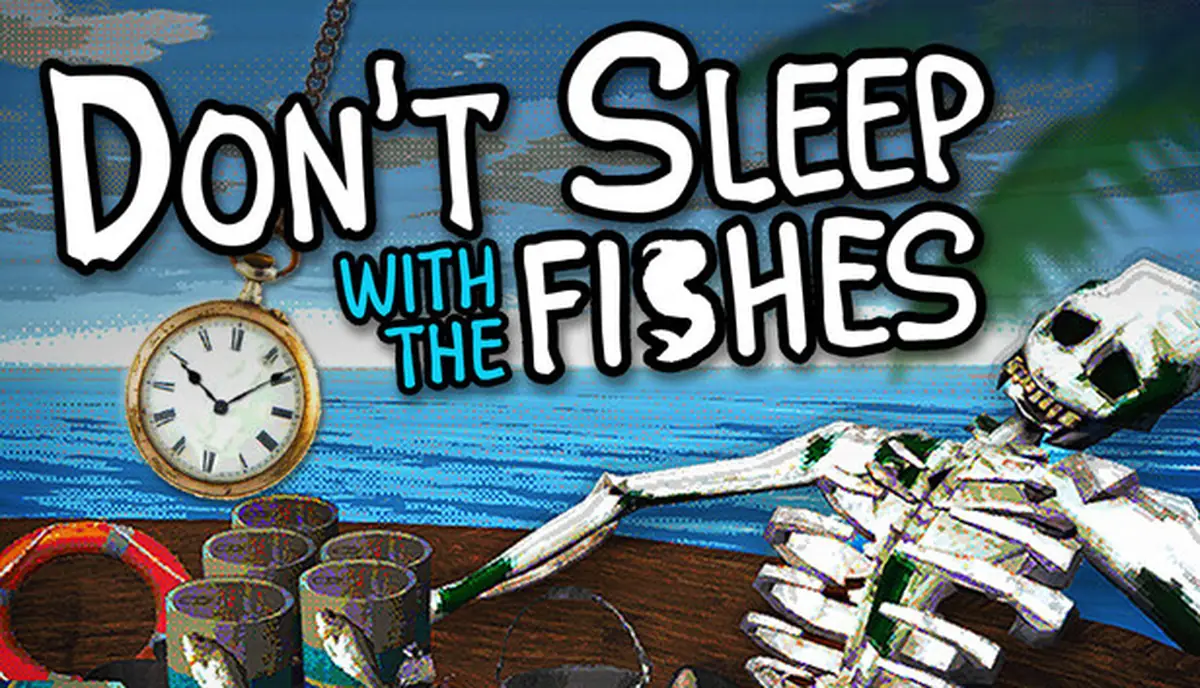
If you searched for dont sleep with the fishes laurel or asked what days are good to talk to Laurel, the honest answer is that no official fixed day list is published. The useful route is a controlled conversation test: keep the boat stable, record the day and event state, and change one variable at a time. This guide separates what the official game page proves from community-style schedule guesses.
Search intent answer
There is no verified magic day. The official store description says that you can talk to a shipmate during the day, while the game also uses randomized scavenging and events. A community post or one successful run can therefore suggest a day without proving that Laurel only responds, unlocks, or changes on that day.
For a first test, talk to Laurel whenever the daytime action is not needed to prevent an immediate food, repair, or boat failure. Write down the day, the exact line or result, the companion state, and what happened after sleep. If the same result appears in two or more otherwise similar runs, it becomes a useful lead. It is still safer to call it a repeatable observation than an official rule.
The store page confirms three shipmates and daytime conversation, but not a complete Laurel schedule or ability table.
Keep one stable run alive, then talk on a day you can afford instead of sacrificing food or repairs for dialogue.
Repeat the same day and state before changing the item loadout, companion, or night-event result.
What is verified
Steam is useful for defining the game systems around this question. Its public description names three shipmates, daytime conversation, randomized scavenging and events, resource management, and multiple endings. Those facts justify a Laurel guide, but they do not turn every search snippet into a reliable route recipe. The store page also changes over time, so this article records the source boundary rather than pretending that a fan-made schedule is permanent.
That distinction matters because conversation is tied to a wider survival loop. A player who misses Laurel after spending all energy on fishing may be seeing ordinary action limits, not a hidden “wrong day.” A player who gets a different line after a night event may be observing event order, not a new ability. Keep the system state with the dialogue result.
| Claim | What the source supports | How to use it |
|---|---|---|
| Three shipmates | Official Steam description | Compare Laurel with one fixed companion choice; do not mix every character in one test. |
| Talk during the day | Official Steam description | Record the day action and remaining energy before calling a response unusual. |
| Randomized events | Official Steam description and update context | Repeat a conversation state before deciding that an event changed the route. |
| Laurel ability | No complete first-party table found in the checked sources | Use community claims as hypotheses and publish only reproducible observations. |
Start with a clean run
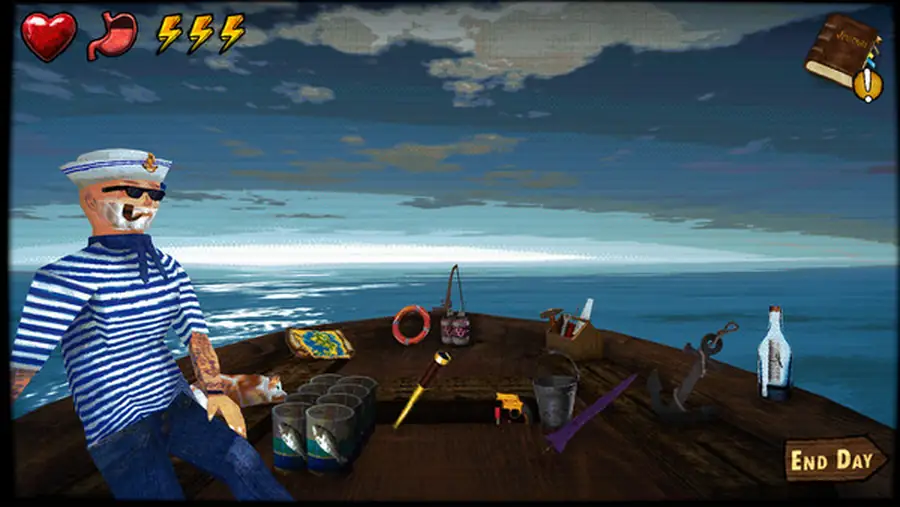
The opening scavenge is not a side detail. It determines whether you can afford to spend a daytime action on Laurel without turning the experiment into a hunger or repair failure. Take enough food and one flexible utility option first. If the boat is already in danger, stabilize it before testing dialogue.
Use the same broad loadout for your baseline attempts. You do not need a perfect inventory; you need a comparable one. If you bring a rare item on the first run and not the second, a different line or night event can no longer be attributed to Laurel. The goal is to make the conversation the visible change, not to optimize every possible route at once.
Conversation test log
The table below is a method for answering the long-tail question “what days are good to talk to Laurel?” It is not a claim that Laurel has a guaranteed line on each day. Start with a stable run, write the result, and stop the experiment if the next action would create an avoidable survival failure.
| Days | Test action | Record | Reason |
|---|---|---|---|
| 1-2 | Do not force a conversation if the opening needs food or repair. | Opening items, energy, boat state, first night result. | Creates a survival baseline before dialogue becomes the focus. |
| 3-4 | Talk to Laurel once when the same baseline is stable. | Exact wording, day, energy left, and whether an event follows. | Tests the common early conversation window without changing the loadout. |
| 5-6 | Repeat the same choice on a comparable run. | Same companion, food range, repair state, and previous night. | Separates a repeatable signal from a lucky line or random event. |
| 7-8 | Change one variable only, such as the previous day action. | What changed and what stayed constant. | Shows whether the conversation depends on route state rather than calendar day. |
| 9-10 | Verify the strongest lead while protecting the end of the run. | Dialogue, next-night result, and ending-related signals. | Stops a small conversation clue from being mistaken for a complete ending route. |
Keep “not enough data” as a valid result. Ten attempts can still be too few when events are randomized. A good note says what was tested and what was not tested; it does not force a confident schedule out of a small sample.
Ability claims
Searches for a Laurel ability are useful because they show that players want more than a name. They want to know whether bringing her changes food, fishing, repairs, dialogue, or a later event. The checked official sources do not provide a full table of those effects. Do not fill that gap with a precise percentage, a guaranteed day, or an “always pick Laurel” verdict.
Instead, use a comparison pair. Keep the opening route, broad inventory, day actions, and night answers as similar as possible. Run one test with Laurel and one with another shipmate. Compare only outcomes that are visible: a line, an action option, a resource count, an event, or a changed ending signal. If the result depends on a random roll, repeat it before drawing a conclusion.
Missed dialogue
First check ordinary constraints: did you run out of energy, end the day too early, skip the conversation action, or load a different companion? Next check the state before sleep. Food, damage, repair, light, and event choices can change what happens next even when the calendar day is identical.
If the run is otherwise strong, continue it and save the note rather than restarting from frustration. A missed line can be useful negative evidence. It may show that the conversation is conditional, that a prior event has to happen first, or simply that a random event displaced it. Only after you record those possibilities should you repeat the same day.
Keep the page boundaries clear
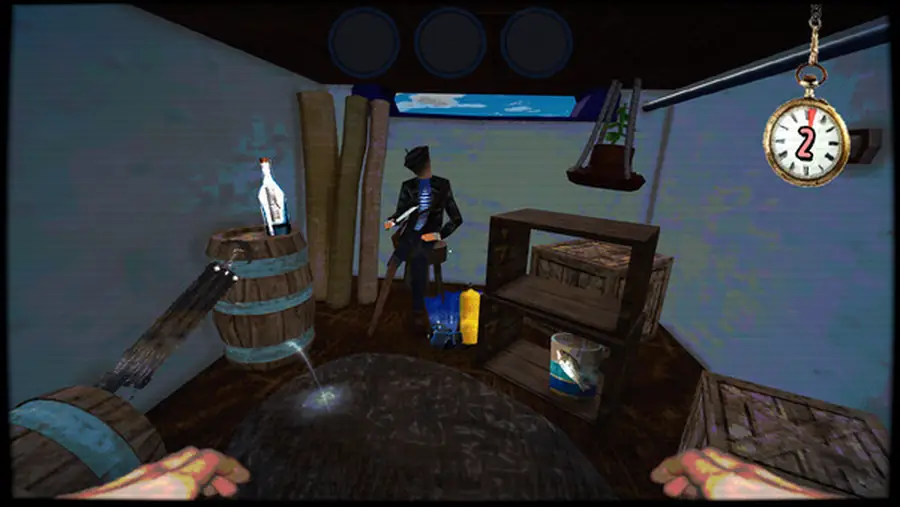
Use the walkthrough when the immediate problem is surviving Days 1-10. Use the wiki when you need the wider item and event map. Use the items guide when an experiment depends on a specific tool. Use the endings guide when the question has become a route-family or spoiler problem. This Laurel page sits between those resources: it gives you a narrow, repeatable way to isolate a companion conversation.
It also does not replace the official download guide. Steam and the developer's itch.io page are the sources for access and version facts. A forum claim about a Laurel schedule should never be used as evidence for a download version, safety claim, or official feature.
Sources and version boundary
Checked August 14, 2026. The official Steam page was retrieved for this research and confirms the game's three shipmates, daytime conversation, randomized events, and multiple endings. The developer's itch.io page remains the official download source recorded by the site; the existing download guide records Windows version 1.1.4.3 as checked on August 8, 2026. This Laurel article does not claim a newer build or a newly verified ability.
FAQ
No official fixed day schedule is published. Use the 10-day test: establish a baseline, talk on a day you can afford, repeat it, and change one variable at a time.
The official page confirms three shipmates and daily conversation, but not a complete Laurel ability table. Treat exact effects as hypotheses until they repeat in a current run.
Record the day, energy, companion, inventory, night event, and last line. Continue if the run is stable, then repeat the same state before changing the route.
No. This page isolates Laurel dialogue timing. Use the endings guide for route families and spoiler boundaries.
Randomized events are part of the official game description. A single successful conversation is therefore not enough to prove a mandatory day.
Start with the walkthrough for survival, then return here when you want to compare one companion variable without mixing it with an entire ending route.