
Item and event guide
Home / Message in a Bottle
Don't Sleep With The Fishes Message in a Bottle: 7 Checks Before You Use It
The Message in a Bottle is best treated as a route clue until you can prove its exact effect in your own run. This guide explains how to decide whether to keep it, test it, or save it for ending research without turning one community clue into a fake guaranteed recipe.
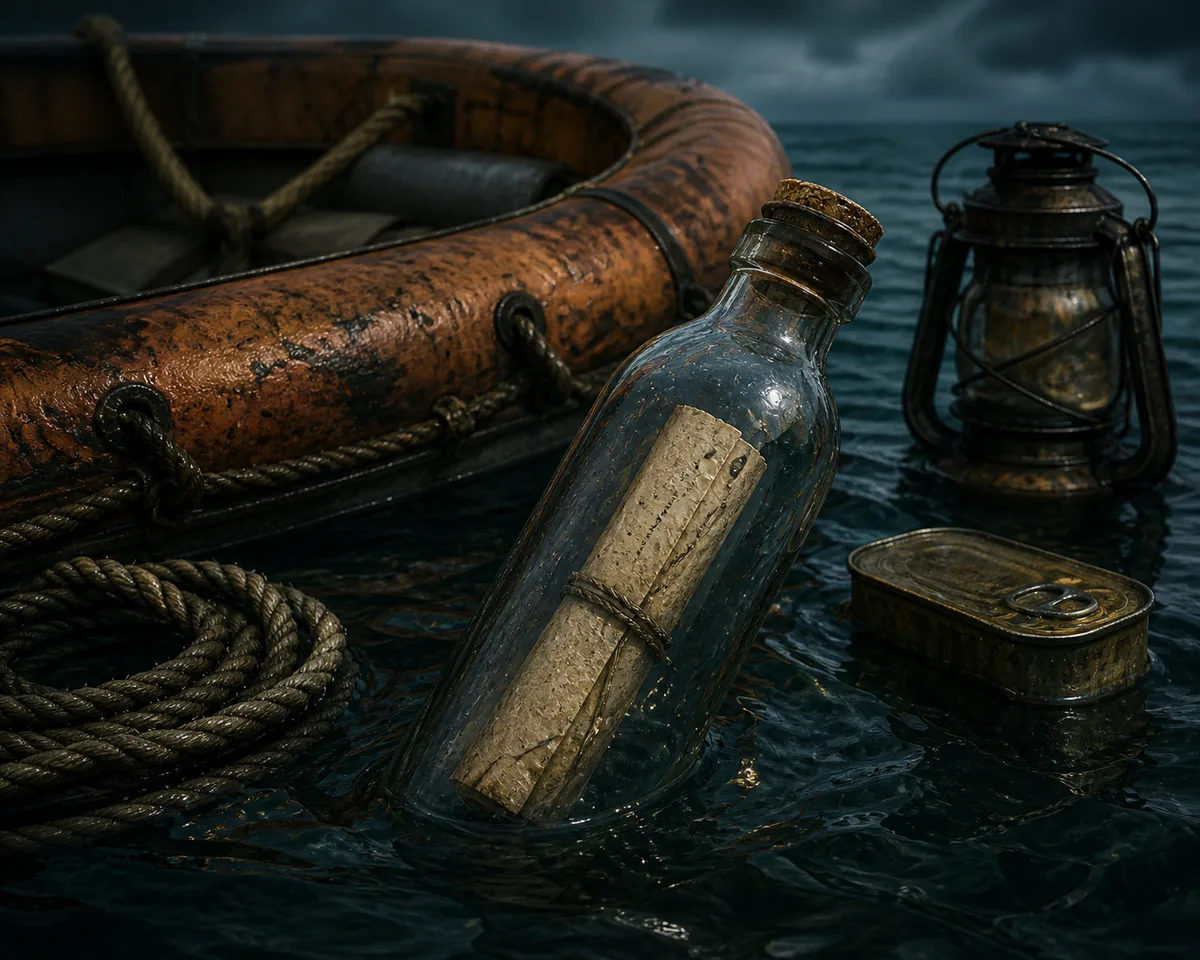
Search intent answer
Quick answer: what should you do with the Message in a Bottle?
Keep it when your food, boat condition, and night-event coverage are already stable. Do not let it replace a core survival item during evacuation or early days.
Use it as evidence, not as a magic key. Public official pages confirm randomized scavenging, randomized events, shipmate choices, and multiple endings, but they do not publish a verified item table for the Message in a Bottle. That means the honest answer is a controlled test plan: note the day, companion, current status, nearby event prompt, and what changed after the item was used or preserved.
For a first clear, survival coverage beats curiosity. For a route-hunting run, the bottle becomes more interesting because it may connect to message, signal, companion, or ending logic. If the run is already failing from hunger or damage, save the lesson for the next attempt instead of spending your last flexible action on speculation.
Seven checks
7 checks before you use or discard it
Survival status
Food and boat condition are stable enough that testing will not kill the run.
Event prompt
The current night or day prompt mentions a message, signal, floating object, memory, or communication.
Companion route
You are keeping the same shipmate so dialogue changes remain readable.
Inventory coverage
You still have food, repair, light, or utility coverage after carrying the bottle.
Ending goal
You are deliberately testing a rescue, message, or true-ending hypothesis.
One variable
Only the bottle choice changes between two attempts.
Written notes
You record result, damage, dialogue, and delayed effects before starting another run.
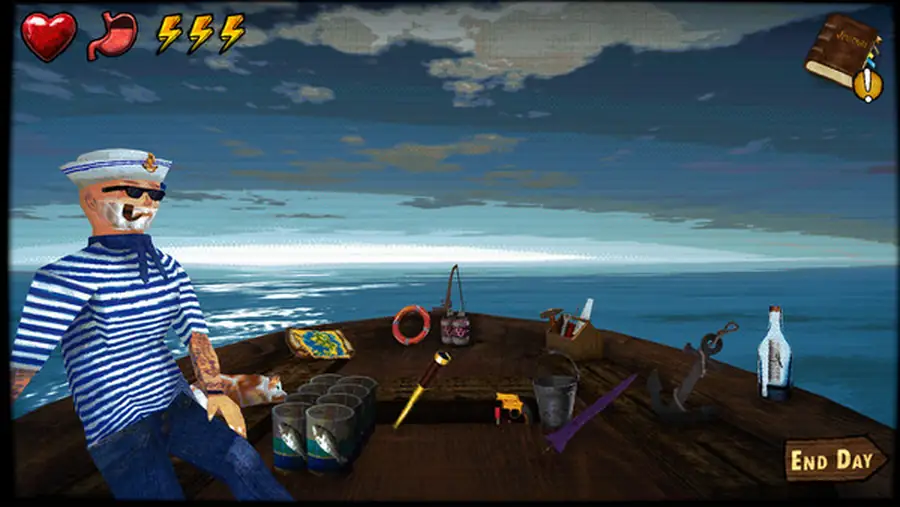
Official screenshot context
Test the bottle only after the scavenge plan is stable
The opening search is timed, so every slot and action has an opportunity cost. Use the bottle as a route clue after food, utility, and night coverage are no longer fragile.
Route evidence
Why this deserves a separate page
Similarweb surfaced a low-difficulty phrase-match keyword for “dont sleep with the fishes message in a bottle” and a related question about what an item is used for. That intent is different from the broad walkthrough and endings pages. A player searching this phrase does not need the entire ten-day route; they need a careful item-specific answer that tells them what is known, what is not verified, and how to test the item without losing a strong run.
The page boundary matters. The walkthrough explains the chronological survival loop. The endings guide explains route families and spoiler-safe testing. This page sits between them: it is a field note for one suspicious item category. If future official notes or reliable community documentation confirm a specific trigger, this page can be updated without rewriting the whole route guide.
Route evidence
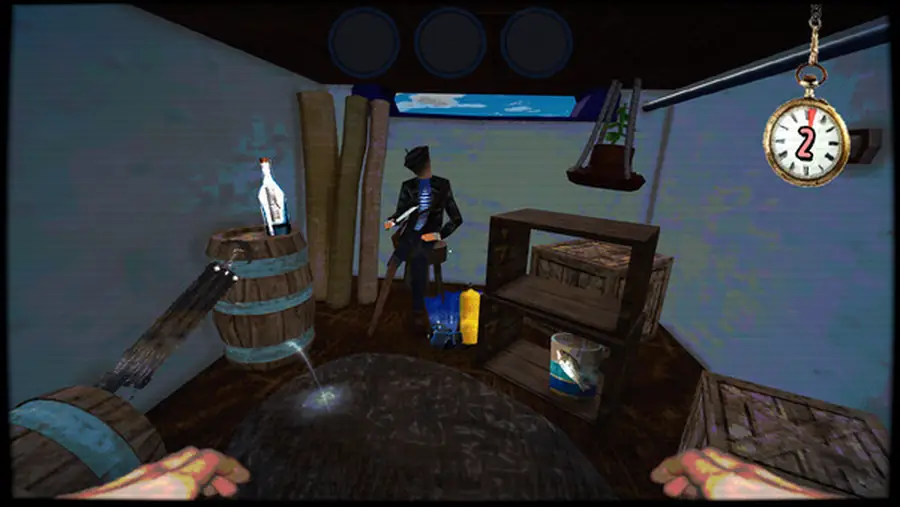
Use the bottle only after the run has coverage
A good Don't Sleep With The Fishes inventory has categories, not trophies. Food keeps the day loop alive. Fishing support turns one resource into a renewable plan. Repair or utility items protect the boat. Light and event counters reduce night risk. The Message in a Bottle may be valuable, but it is narrow until the game asks for that type of answer.
If you are still learning the game, keep the bottle only when it does not crowd out a basic category. On a first clear attempt, the safer decision is often to bring one flexible curiosity after food and utility are solved. If the lifeboat is already short on food, a bottle clue is less useful than the ability to reach another day.
Route evidence
How to test it without inventing a false route
Controlled testing is simple: create two comparable attempts. Keep the same shipmate, similar inventory, and similar day plan. In one attempt, keep the bottle through the relevant event. In the other, use or drop it only when the prompt looks connected. Then compare visible output: new dialogue, damage change, companion reaction, rescue progress, or a delayed ending clue.
Do not treat one lucky result as proof. Randomized events can make two runs look connected when they are not. Write down exact wording from the event prompt when possible, and separate facts from guesses. A fact is “using the bottle on this prompt produced this text.” A guess is “the bottle probably unlocks a true ending.” Keeping that distinction makes the guide more useful than a rumor list.
Route evidence
Where the Lily question fits
Similarweb also surfaced the question “what is the liliy used for in dont sleep with the fishes.” The spelling suggests players may be asking about a Lily/Liliy item or a misread item name. At the current data level, that is not strong enough for a separate page. Treat it as a related FAQ and test it with the same method: do not replace survival supplies, only change one variable, and record whether the item affects dialogue, a night event, or an ending condition.
Route evidence
Official-source and community boundary
Official Steam and itch.io pages are useful for platform, release, and version facts. They do not currently provide a public item database. Community pages can be useful leads, especially for events and character references, but they should be cited as community evidence and verified in play before becoming route instructions.
Version check for this update: official itch.io still showed version 1.1.4.3 for Windows on August 8, 2026, with the previously recorded ZIP and RAR file sizes. Steam remains the official store page for the Windows release, achievements, and requirements, but this site does not invent a Steam build number or direct file link.
Decision aid
Decision table: keep, test, or skip the bottle
| Run state | Best action | Why |
|---|---|---|
| First survival clear | Skip or carry only if space is safe | Food, fishing, repair, and night counters matter more. |
| Stable mid-run | Keep it | A clue item becomes affordable once basic risk is controlled. |
| Message or signal event | Test it | The prompt language finally matches the item theme. |
| Ending research | Keep detailed notes | The bottle may belong to a route family, but proof needs repetition. |
| Failing from hunger or damage | Do not spend the run on it | Recover the survival loop before testing curiosities. |
Route boundary
Connect this item note to the walkthrough and endings guide
Use the Walkthrough when the run is dying early. Use the Endings guide when the bottle result points toward a branch. Use the Official Download for current Steam and itch.io source checks.
FAQ
Message in a Bottle FAQ
Is the Message in a Bottle required for every ending?
No verified public source supports that claim. Treat it as a possible route clue and confirm with controlled runs.
Should I pick it up during evacuation?
Only after food, utility, and repair coverage are safe. A narrow clue is not worth losing the basic survival loop.
Can it help with rescue?
It might be relevant when a prompt mentions messages or signaling, but this guide does not claim a guaranteed rescue use without proof.
What is the Lily or Liliy used for?
At current Similarweb demand and available evidence, it fits as a related test note rather than its own page. Use the same one-variable method.
Where should I go after testing it?
Use the walkthrough for survival stability and the endings guide when your notes point toward a route branch.
Evidence
Checked sources and evidence boundary
Checked August 8, 2026. Official store pages verify game and version context; community pages are leads for item and event testing, not official route proof.
- Steam - official Windows release page, achievements, requirements, and store context.
- itch.io - developer project page, checked for version 1.1.4.3 on 2026-08-08.
- Unofficial community events reference - used only as a lead for event and item testing.