1. Event wording
Copy the exact prompt or dialogue. A small wording change can describe a different event.
 Fishes Guide
Seagull event guide
Home / Seagulls
If you searched what happens with the seagulls in Don't Sleep With The Fishes, the most useful short answer is: do not treat one bird choice as a hidden password. Observe the event, protect the run, and test shooing against leaving the seagulls alone while every other important variable stays as close as possible.

Search intent answer
The seagull question is a small but useful route problem. A player sees birds around the boat and wants to know whether to shoo them, leave them alone, or expect a change in food, health, a night event, a companion reaction, or an ending. The safe answer is to separate what the game visibly shows from what a community post guesses.
Start with the event wording and the state of the boat. Write down the day, companion, food reserve, repair options, light or utility items, and what you did immediately before sleeping. If you shoo the seagulls, record the exact result. If you leave them alone, record the same fields. Without that baseline, a changed result may come from random event order rather than the seagulls effect.
This page therefore gives you a repeatable test instead of inventing an official rule. It also connects the event to the existing survival walkthrough, items guide, and endings guide, because the bird choice should be read inside the wider survival loop.
Meaning and limits
“What happens with the seagulls?” can describe several different needs. Some players want the immediate animation or dialogue result. Others want to know whether shooing changes a resource, whether the birds return at night, or whether a seemingly small choice contributes to a larger route. Those are different checks, so a good answer should not collapse them into one claim.
The public game context used by this site supports a survival loop with scavenging, limited boat space, companions, night interruptions, random events, and multiple endings. That context makes controlled notes more useful than a universal one-line recipe. The official store and developer pages are appropriate for the game identity and release context; they are not a substitute for a reproducible route experiment.
Use three labels in your notes: observed for something visible in your own run, reported for a community lead, and unconfirmed for an explanation that still needs a repeat. This keeps the seagulls effect useful without presenting an unofficial theory as a guaranteed ending condition.
Seagulls effect checklist
Copy the exact prompt or dialogue. A small wording change can describe a different event.
Record food, health, repair, light, and flexible utility before choosing an action.
Keep the same shipmate when comparing runs so dialogue is not another moving part.
Check what changes after sleep, not only what the birds do on the current screen.
Do not call a new ending a seagull effect until the same choice repeats under similar conditions.
Read the scene in context
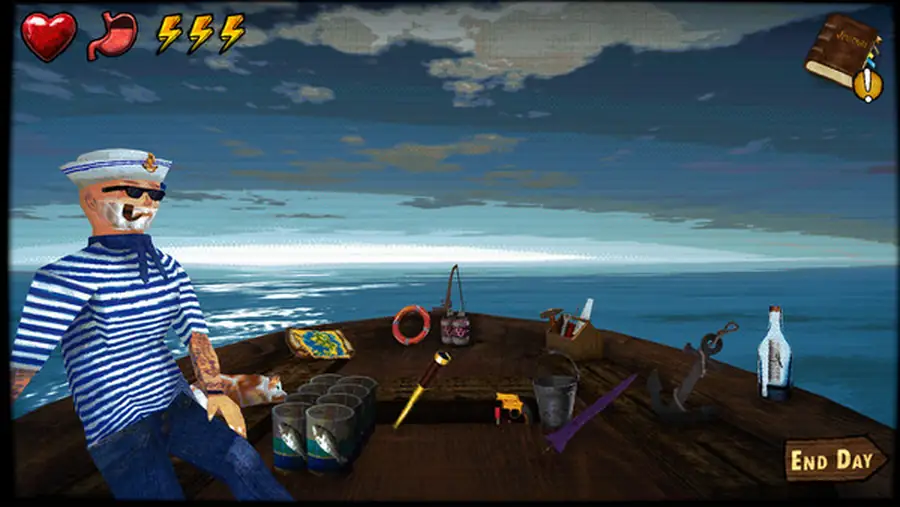
A boat can look healthy while the next night is already under-resourced. The official gameplay image used elsewhere on this site shows the kind of crowded deck where food, tools, fishing support, and story objects compete for attention. If the seagulls appear during that phase, the correct first move is not automatically the most dramatic one; it is the move that leaves enough coverage for the next threat.
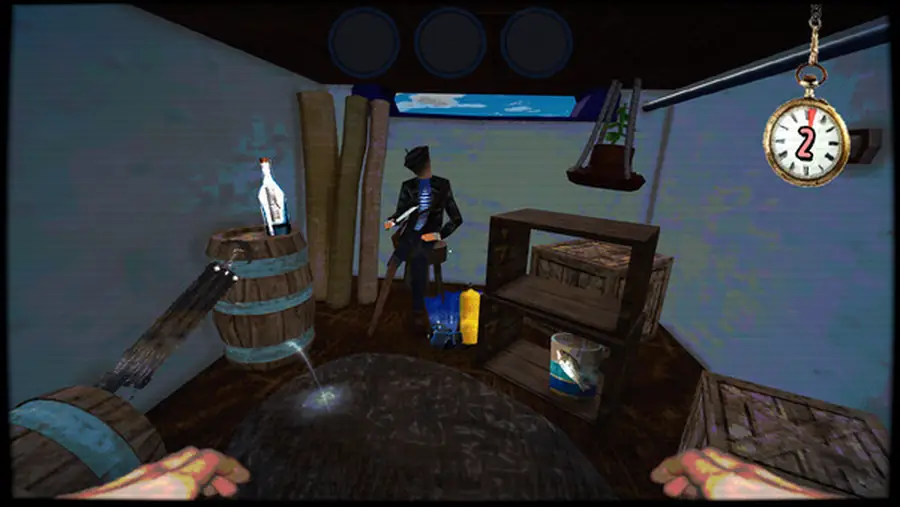
Before shooing, ask whether you are about to spend an action, lose a useful item, or delay fishing and repair. Before ignoring the birds, ask whether the event leaves a visible item, dialogue flag, or route clue. These questions are more reliable than assuming every harmless-looking animal is cosmetic or every unusual animation is a secret ending trigger.
For item-specific choices, continue to the item priorities guide. It is the better home for broad resource coverage; this page only explains how to isolate the seagull variable.
Repeatable route test
Use a three-run comparison. The goal is not to prove a data-mined formula in one attempt; it is to make the next observation more informative.
Decision matrix
| What you observe | Best interpretation | Next action |
|---|---|---|
| The same result after shooing twice | Useful local evidence, still not a universal rule | Repeat with one different companion or day state. |
| Only the animation changes | Cosmetic or immediate event response is possible | Check resources, dialogue, and next night before changing route notes. |
| Food, repair, or health changes too | The choice may interact with the survival economy | Log exact before/after counts and link the finding to the items/walkthrough notes. |
| A new dialogue line appears | Potential companion or route flag | Keep the companion fixed and repeat the dialogue path. |
| An ending changes once | Interesting lead, not proof | Use the endings matrix and reproduce it before naming a seagull ending. |
Existing route connections
The seagull page is intentionally narrow. It does not replace the main walkthrough, and it does not claim to be a complete character or ending database. Use it as a troubleshooting node when a bird event interrupts an otherwise controlled run.
Start with the walkthrough if basic hunger, repair, or night survival is still unstable. Use the items guide when you need to decide what can safely stay on the boat. Open the endings guide only after the seagull observation repeats. The wiki hub is the right place for broader event, character, and evidence notes, while the Captain Whiskers guide handles the cat-specific route question.
This separation keeps the new page from competing with an existing URL for the generic game, endings, items, or walkthrough terms. The new page owns the question-shaped seagull intent; related pages own the larger route decisions.
Evidence boundary
Official Steam and developer itch.io pages are the proper sources for the game title, store context, and release access. Community pages and videos can be useful leads when they show a precise event, but they can also omit a day, companion, inventory state, or version. Treat a clip as a hypothesis generator, not as a guaranteed seagull walkthrough.
The current official download context on this site was checked separately on August 8, 2026: itch.io listed version 1.1.4.3 Windows files, while Steam served as the official store page. This seagull guide does not claim that a version change caused a route change, and it does not host or link unofficial downloads. If an older video disagrees with your run, record the version and source before rewriting the route.
For the public sources, see the official Steam page and the developer's itch.io page. They establish context; your controlled notes establish whether the bird choice actually changes your run.
FAQ
Do not assume shooing is always correct. Record the event, protect the rest of the run, and compare one shoo run with one observe run before treating the result as a rule.
The useful answer is a test plan: compare resources, companion state, the next night, and the route result. A single animation or community clip does not prove a universal effect.
There is not enough verified evidence here to say that seagulls alone determine an ending. Repeat the event with one controlled change, then use the endings guide to separate a real route signal from random order.
Random event order, day number, food, health, boat condition, companion choice, and sleep timing can all change a run. Compare those fields before blaming the bird choice.
Use the walkthrough for a stable baseline, the items guide for resources, the endings guide for route testing, and the wiki for broad event notes.
Checked sources